
Ukusheshisa Ukufudumala Komhlaba Wonke Kubeka Izinsongo Ezinkulu Ekukhiqizweni Kwamazambane Nasemaketangeni Okuhlinzekwayo
Ukuthatha okhiye
- Warming at 0.35°C per decade since about 2015
- Against 0.2°C per decade from 1970 to 2015
- Confirmed in five datasets, 98%+ confidence
- Heat in tuber formation cuts yield and dry matter
- Reducing sugars darken fries and chips
Kungani kubalulekile
- Kwabalimi
- Irrigation demand, pest windows and storage cost all move at once — the adaptation is not a single decision.
- Okwamaphrosesa
- Reducing sugars are the direct commercial link: warming shows up as fry colour before it shows up as tonnage.
- Kwabatshalizimali
- Heat- and drought-tolerant breeding, precision irrigation and storage technology are where the response capital is going.
60-isekhondi isifinyezo
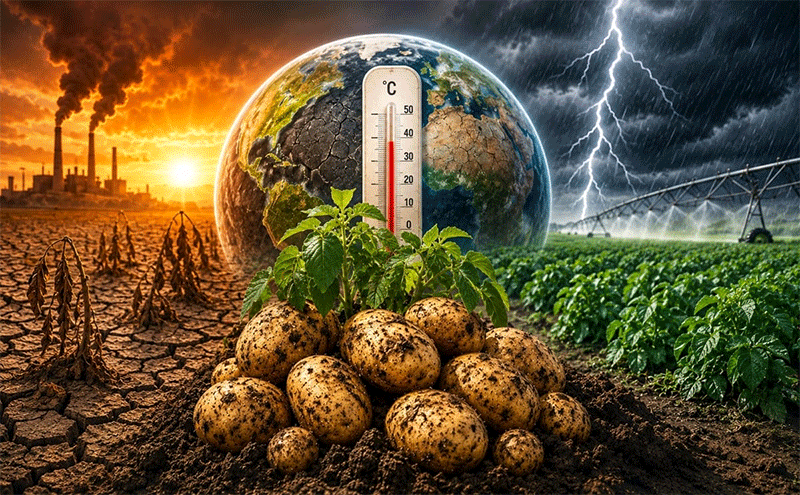
A study from the Potsdam Institute for Climate Impact Research, published in Geophysical Research Letters, finds that global warming has accelerated since around 2015: temperatures are rising at 0.35°C per decade against 0.2°C per decade between 1970 and 2015, confirmed across five independent datasets at over 98% statistical confidence. For potatoes — grown in more than 150 countries with output above 380 million tonnes — this matters more than for cereals, because the crop favours cooler conditions. Heat during tuber formation reduces yield, shortens the season and cuts dry matter accumulation, while promoting secondary growth, cracking and hollow heart and raising reducing sugars that darken fried products. Beyond the field, higher evapotranspiration and erratic rainfall intensify irrigation demand, aphids, psyllids and late blight expand their range, and storage faces higher cooling costs and losses from premature sprouting.
Ucwaningo olusha lwesimo sezulu oluvela ePotsdam Institute for Climate Impact Research (PIK), olushicilelwe ku- Izincwadi Zokucwaninga Zezepolitiki, kwembula ukuthi ukufudumala komhlaba akuqhubekanga nje kuphela kodwa kusheshile kusukela cishe ngo-2015, kanti amazinga okushisa manje akhuphuka ngesivinini esingu-0.35°C ngeshumi leminyaka—cishe kabili kune-0.2°C ngeshumi leminyaka elibonwe phakathi kuka-1970 no-2015. Lo mkhuba, oqinisekiswe kumasethi edatha amahlanu azimele anokwethenjwa kwezibalo okungaphezu kuka-98%, unomthelela omkhulu kwezolimo, ikakhulukazi kumazambane, isitshalo esitshalwe emazweni angaphezu kuka-150 esinomkhiqizo waminyaka yonke odlula amathani ayizigidi ezingu-380. Ngokungafani nokusanhlamvu, amazambane ayachuma ezimweni ezipholile, okwenza abe sengozini enkulu yokucindezeleka kokushisa: amazinga okushisa akhuphukayo ngesikhathi sokwakheka kwe-tuber anciphisa isivuno, afinyeze izinkathi zokukhula, futhi anciphise ukuqongelela kwezinto ezomile. Izimo ezifudumele nazo zikhuthaza ukukhubazeka komzimba njengokukhula kwesibili, ukuqhekeka, kanye nenhliziyo engenalutho, kuyilapho kukhulisa ukuncipha koshukela okwenza imikhiqizo ethosiwe ibe mnyama njengama-fries nama-chips—okuthinta ngqo ikhwalithi yokucubungula kanye nokuthengiseka.
Beyond the field, accelerated warming threatens water management, pest dynamics, and post-harvest systems. Higher evapotranspiration rates and increasingly erratic rainfall will intensify irrigation demands, while pests like aphids and potato psyllids—along with diseases such as late blight—are expected to expand their geographic range and activity periods. Storage faces rising cooling costs and greater losses from premature sprouting and respiration under elevated temperatures, while extreme weather events disrupt harvesting, transport, and processing, heightening supply chain volatility. In response, researchers, breeders, and industry players are accelerating investments in heat- and drought-tolerant varieties, precision irrigation, regenerative soil practices, digital monitoring, and advanced storage technologies. Organizations like the International Potato Center (CIP) are fast-tracking breeding programs, while AI and remote sensing offer farmers real-time tools for adaptive management. However, as the PIK study underscores, the pace of warming is quickening, demanding equally rapid and coordinated action across science, policy, and the entire potato value chain to safeguard this essential global food source.
Isifinyezo Samazambane Omhlaba Wonke
Izindaba ezinhlanu eziphezulu, amanani, izexwayiso zezifo kanye nemicimbi. Ekuseni phakathi nesonto, akukho ukukhangisa.
Imithombo
- Potsdam Institute for Climate Impact Research (PIK), published in Geophysical Research Letters — named in the article
Kuxhunywe kulokhu okuqukethwe
Izindaba ezihlobene

Abalimi Bamazambane BaseRussia Babhekene Nezinkinga Ezimbili Ngo-2026: Isimo Sezulu Esibi Kakhulu Nokubandlululwa Kwemakethe Yokuthengisa

Isimo Sezulu Esibi Sibhubhisa Isivuno Samazambane Kuwo Wonke Umhlaba eRussia naseKazakhstan, Okwenza Amanani Akhuphuke


