IKyrgyzstan: Isivuno Samazambane Siwa ngamathani ayizigidi ezingu-7.5% kuya ku-1.19 njengoba indawo incipha ngo-8.4%
Ukuthatha okhiye
- 1.19 Mt of potatoes harvested in Kyrgyzstan during 2024
- 7.5% fall in the Kyrgyz potato harvest compared with 2023
- 8.4% smaller potato area in 2024, at about 66,400 ha
- 17.9 t/ha average Kyrgyz potato yield in 2024, up slightly
Kungani kubalulekile
- Kwabalimi
- Invest in seed and inputs rather than extra hectares, as the ministry advises; the national yield of 17.9 t/ha leaves room to gain.
- Kwabahwebi
- Factor in larger crops from Uzbekistan, Kazakhstan and Tajikistan when planning Kyrgyz potato exports to regional markets.
- Kwabahlinzeki
- Pitch yield-raising seed and fertiliser packages; Kyrgyz output grew only about 14% since 2000 on a similar area.
60-isekhondi isifinyezo
Kyrgyz potato production has stood almost still for a generation while the rest of Central Asia surged ahead. Official statistics show roughly 1.2 million tonnes dug last year, a decline of 7.5% driven by an 8.4% cut in planted land to some 66,400 hectares. Productivity nudged up to about 17.9 tonnes per hectare. Compared with 2000, national volume is only about 14% higher. Over the same period Uzbekistan grew about fivefold and Tajikistan fourfold, leaving Kyrgyzstan the smallest of the four producers. The agriculture ministry has told growers not to chase high prices with extra hectares and to invest in yield instead, warning that neighbours are expanding too. For seed and input firms, the modest yield base is the opening, while traders face a smaller exporter in a crowded regional market. A caveat: the most recent full-year figures cover 2024, and the 2025 harvest has not yet been reported.
Kyrgyzstan harvested 1,190.2 thousand tonnes of potatoes in 2024, according to the National Statistical Committee. That was 7.5% less than in 2023, when the harvest was 1,286.8 thousand tonnes. The area under potatoes fell by 8.4%.
The yield improved slightly. It reached 178.7 centners per hectare, or 17.9 t/ha. That was 2.8 centners more than a year earlier. FAOSTAT, published by Our World in Data, shows the same volume for 2024.
A flat quarter century
The long-term picture is flat. In 2000, Kyrgyzstan produced 1.05 million tonnes, according to FAOSTAT. The yield was 15.2 t/ha. By 2014, output had risen to 1.32 million tonnes. The 2024 harvest was only about 14% above the 2000 level.
Izinsuku zeviki. Zikhiphe ohlwini ngokuchofoza okukodwa.
The area has hardly changed. The planted area was 66,400 hectares in 2024, according to the agriculture ministry, as reported by EastFruit. The FAOSTAT data imply about 69,000 hectares in 2000. Growth over 24 years therefore came from yields, which rose by about 18%.
Neighbours grew faster
Other Central Asian producers expanded much more. FAOSTAT shows 3.72 million tonnes in Uzbekistan in 2024, against 0.73 million tonnes in 2000. Kazakhstan produced 2.63 million tonnes, up from 1.69 million tonnes. Tajikistan reached 1.26 million tonnes, up from 0.30 million tonnes.
Kyrgyzstan was once the second producer in this group after Kazakhstan. It is now the smallest of the four.
Ministry warns against chasing prices
Strong demand from the Eurasian Economic Union and neighbouring countries lifted prices in 2024, EastFruit reported. The Ministry of Water Resources, Agriculture and Processing Industry then advised farmers not to expand potato plantings. Officials warned that bigger areas driven by high prices could lower market prices and farm income.
The ministry also expected neighbouring countries to increase their own areas. It recommended that farmers focus on productivity and new technologies instead.
Kungani kubalulekile
Kyrgyzstan has kept its potato area but lost ground in the region. Neighbours with larger programmes now supply much bigger volumes. Kyrgyz growers therefore compete in the same export markets with a smaller base.
The official advice points to yield, not land. At 17.9 t/ha, the national average leaves room for gains from better seed and inputs.
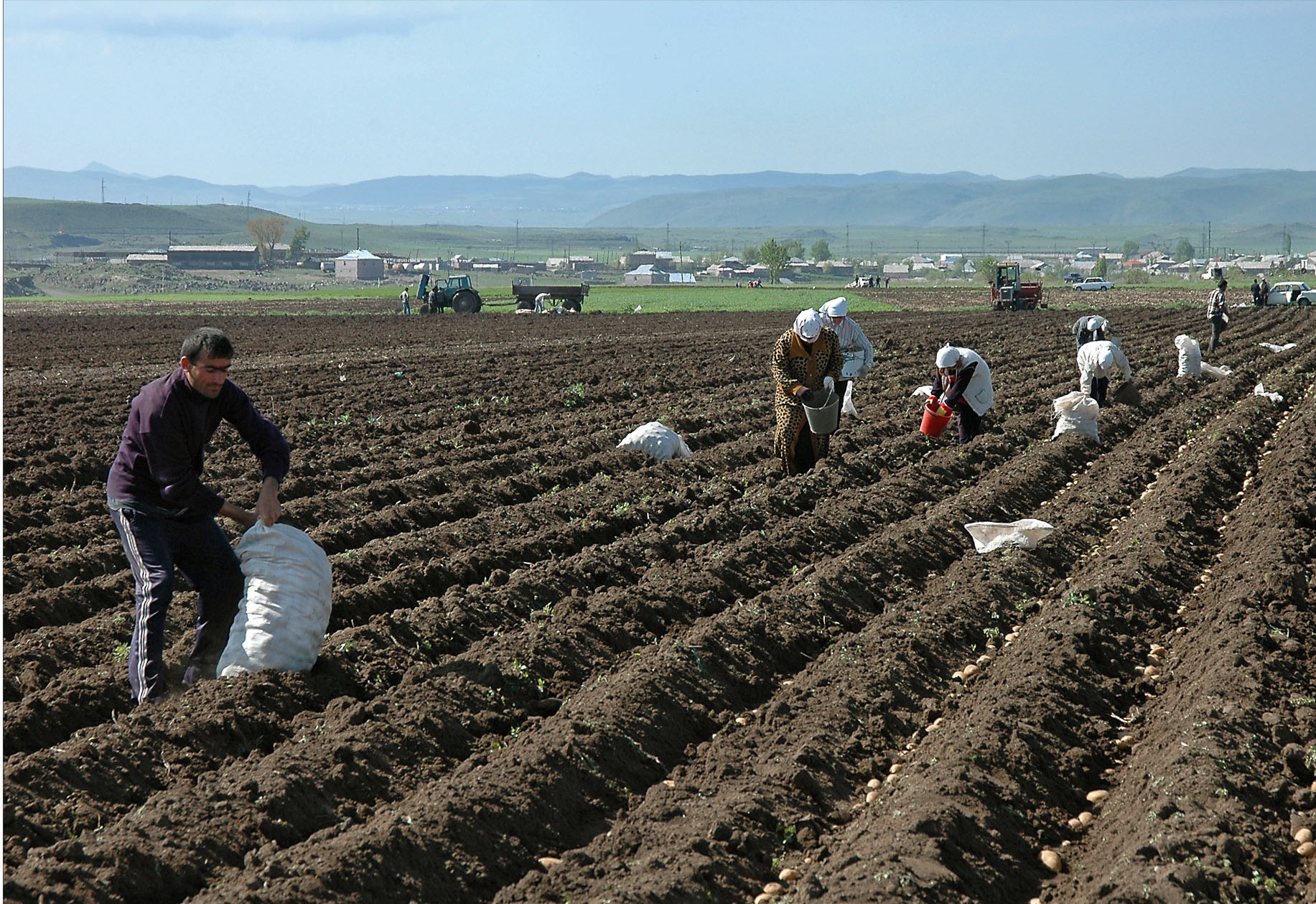
Photo: Potato harvest in Armenia (not Kyrgyzstan) (illustrative). Narek75 / Wikimedia Commons, CC BY-SA 4.0
Isifinyezo Samazambane Omhlaba Wonke
Izindaba ezinhlanu eziphezulu, amanani, izexwayiso zezifo kanye nemicimbi. Ekuseni phakathi nesonto, akukho ukukhangisa.
Okulandelayo
The statistics committee usually publishes full-year harvest results in late January. The 2025 figures will show whether farmers followed the advice not to expand area.
Imithombo
- Нацстатком КР, «Итоги сбора урожая сельскохозяйственных культур в 2024 году», 30.01.2025 — https://stat.gov.kg/ru/news/itogi-sbora-urozhaya-selskohozyajstvennyh-kultur-v-2024-godu/
- EastFruit, 10.04.2025 — https://east-fruit.com/novosti/fermeram-kyrgyzstana-rekomenduyut-sosredotochitsya-na-urozhajnosti-kartofelya-a-ne-uvelichivat-ploshhadi/
- I-FAOSTAT nge-Our World in Data, ukukhiqizwa kwamazambane — https://ourworldindata.org/grapher/potato-production
- I-FAOSTAT nge-Our World in Data, isivuno samazambane — https://ourworldindata.org/grapher/potato-yields
Kuxhunywe kulokhu okuqukethwe
- Izwe
- Kyrgyzstan
Izindaba ezihlobene
IPeru: Umkhiqizo Wamazambane Uphindwe Kabili Wafinyelela Ku-6.58 Million Tonnes Kusukela Ngo-2000 Njengoba Isivuno Sifinyelela Ku-19.5 t/ha
IBolivia: Isivuno Samazambane Sifinyelela Amathani Ayizigidi Eziyi-1.38 Kodwa Isivuno Sihlala Siseduze Nama-t/ha angu-6.5