Pakistan Sets a 160,000-Tonne Certified Seed-Potato Target Under a Korea-Backed Aeroponic Project

Ukuthatha okhiye
- 160,000 t of certified seed potatoes a year is the goal
- 1 joint programme with Korea's KOPIA, run at NARC Islamabad
- 3 components: seed supply, aeroponic facilities, training
- 0 timeline given for reaching the 160,000-tonne target
Kungani kubalulekile
- Kwabalimi
- Pakistani growers should watch for certified seed from the programme; cleaner seed reduces virus losses compared with farm-saved tubers.
- Kwabahlinzeki
- Seed exporters selling to Pakistan should plan for a gradual shift towards domestic certified seed and consider minituber or genetics partnerships instead.
- Kwabatshalizimali
- Aeroponic and seed-multiplication capacity in Pakistan is a new opportunity; the project creates demand for infrastructure and training.
60-isekhondi isifinyezo
Islamabad and Seoul are teaming up to give Pakistan its own certified seed-potato pipeline. At NARC, officials set an annual goal of 160,000 tonnes of certified seed under a programme backed by KOPIA, Korea's international agriculture initiative, and implemented by the national research council PARC. The package combines seed production and distribution, aeroponic units for disease-free minitubers and staff training. The food security minister called it a step towards a self-sustaining seed system. No deadline was attached to the target and current certified output was not disclosed, so the scale of the jump cannot be measured. The event was reported by 16 to 17 September; a later foreign reprint carried a wrong date. If delivered, the programme would reduce dependence on imported and farm-saved planting material, with consequences for foreign seed suppliers.
Pakistan aims to produce 160,000 tonnes of certified seed potatoes a year under a cooperation project with South Korea, officials said at an event at the National Agricultural Research Centre (NARC) in Islamabad, reported by ARY News on 16 September and The Nation on 17 September.
The Pakistan-Korea Collaborative Project on Certified Seed Potato Production is supported by the Korea Program on International Agriculture (KOPIA). It covers certified seed production and supply, modern aeroponic infrastructure and training of technical staff. The Korean ambassador attended the event.
Federal Minister for National Food Security Rana Tanveer Hussain described the project as an important step towards a sustainable local seed system for the potato sector. The Pakistan Agricultural Research Council (PARC), chaired by Dr Murtaza Hassan Andrabi, is the Pakistani implementing side. According to ARY News, Pakistan also wants to expand cooperation with Korea in smart farming, horticulture, livestock and agricultural mechanisation.
Izinsuku zeviki. Zikhiphe ohlwini ngokuchofoza okukodwa.
The 160,000-tonne figure is a target, not current production, and the reports do not say by which year it should be reached or how much certified seed Pakistan produces today.
Aeroponics — growing plants with their roots suspended in air and sprayed with nutrient solution — is used to produce large numbers of disease-free minitubers, the first generation of a certified seed chain. Those minitubers are then multiplied in the field over several generations before reaching farmers.
A trade site, VerticalFarmDaily, reprinted the story with a date of 21 September; the Pakistani reports show the announcement was made earlier, by 16 September.
Kungani kubalulekile
A domestic certified seed system of this size would reduce Pakistan’s need for imported seed and could lift yields by cutting virus loads in farmers’ planting material. For European and other seed exporters, it signals a market that intends to supply more of its own needs — though the reports give no timeline for reaching the target.
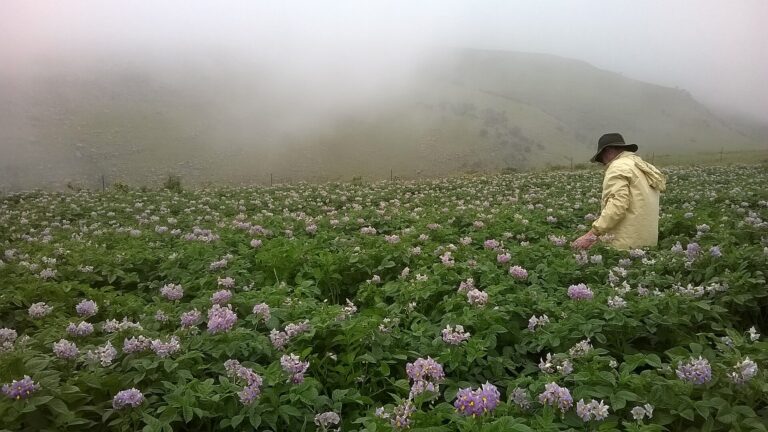
Isithombe: Potato fields at Lalazar in the Kaghan valley, Pakistan (illustrative). Mudassar murtaza / Wikimedia Commons, CC BY-SA 4.0
Isifinyezo Samazambane Omhlaba Wonke
Izindaba ezinhlanu eziphezulu, amanani, izexwayiso zezifo kanye nemicimbi. Ekuseni phakathi nesonto, akukho ukukhangisa.
Okulandelayo
The reports give no year for reaching the 160,000-tonne target and no figure for current certified seed output.
Imithombo
- The Nation — https://www.nation.com.pk/17-Sep-2026/pakistan-korea-cooperation-strengthens-certified-potato-seed-production
- ARY News — https://arynews.tv/pakistan-and-south-korea-expand-cooperation-on-potato-seed-production
- VerticalFarmDaily — https://www.verticalfarmdaily.com/article/9874125/pakistan-and-south-korea-expand-cooperation-on-potato-seed-production/
- The 160,000 t figure is a government target.
Kuxhunywe kulokhu okuqukethwe
- Izwe
- Pakistan
- Izinkampani
- KOPIA; PARC; NARC
- Ubuchwepheshe
- aeroponic minituber production
Izindaba ezihlobene
ITurkey: I-Niğde Institute Ivuna Ama-Minituber Asezingeni Eliphezulu Esistimu Ye-Hydroponic

IBelarus: Isivuno Samazambane Sifinyelela Ku-43% Wecebo Njengoba Abalimi Bemba Amathani Angu-317,000